
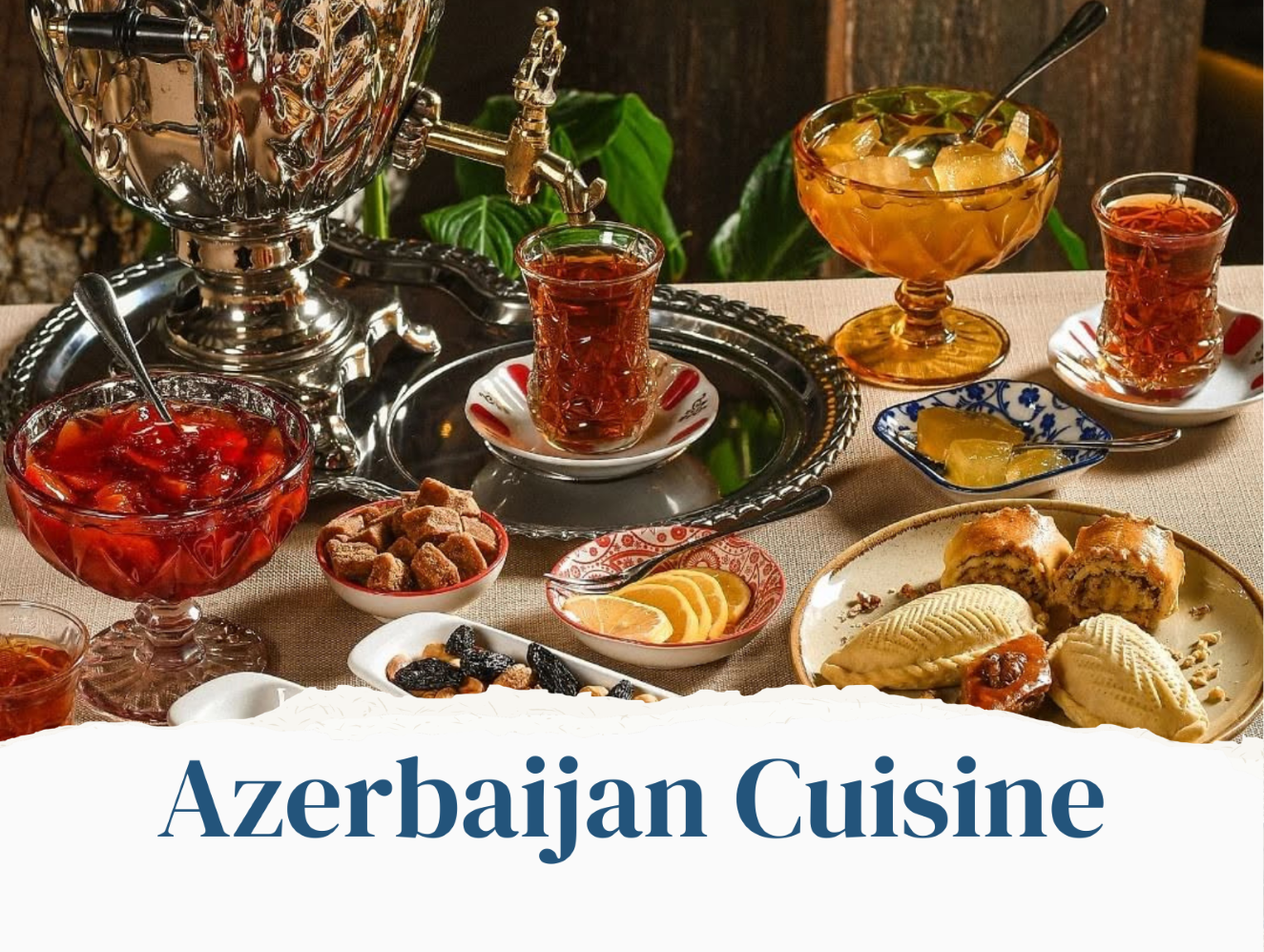
Azerbaijan cuisine truly sits at a crossroads – Persian rice technique, Turkish grilling tradition, Central Asian dumplings, and Caucasian mountain ingredients all meet on the same table. The result is a cuisine built around fragrant rice dishes, slow-cooked meats, fresh herbs, and an extraordinary tea culture that shapes daily life as much as the food itself.
This guide covers the dishes you need to try in Azerbaijan, the food traditions and etiquette behind them, and what to know about Azerbaijani wine – which is far older and less well-known than most visitors realize.
Planning a trip to Azerbaijan? Explore our Caucasus tours to discover Baku and beyond with all the comforts.
Plov: The Crown of Azerbaijan Cuisine
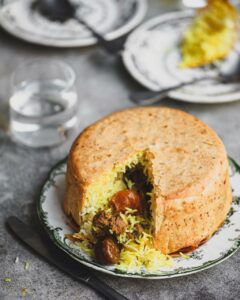
Plov is Azerbaijan’s signature dish. Unlike the simpler rice pilafs common across Central Asia, Azerbaijani Plov is a layered, ceremonial dish that includes saffron-infused rice, separately cooked meat and fruit fillings, and a crisp golden crust called Gazmag formed at the bottom of the pot. There are over 200 documented regional variations.
- Shah Plov (or “king’s plov”)
The most lavish kind of Plov, traditionally offered at weddings and royal feasts. Before baking, saffron rice is wrapped completely in a thin sheet of lavash bread and layered with meat, chestnuts, dried apricots, raisins, and barberries before baking. When the lavash crust is cut open at the table, it reveals the rice and fruit inside, a true centerpiece.
💡 Local tip: Shah Plov is often pre-ordered at restaurants in Baku since it takes time to prepare properly. If you see it on a menu, it’s worth the wait.
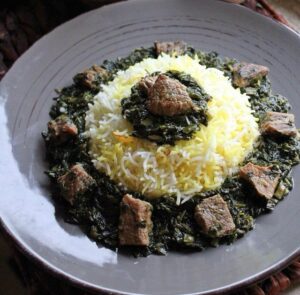
- Sabzi Qovurma Plov (sabzi-qovurma plov)
A herb-and-lamb version of Plov, layered with a generous mix of fresh dill, cilantro, mint, and tarragon along with stewed lamb or beef. The herbs are simmered down until deeply aromatic, giving this version a green-tinted richness that’s different from the fruit-and-nut Plov varieties.
💡 Local tip: This is one of the most commonly home-cooked Plov varieties; ask a local guesthouse if they can prepare it for you.
Dolma, Dumplings & Grilled Meats
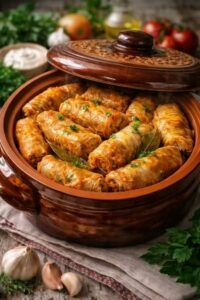
- Dolma (dolma)
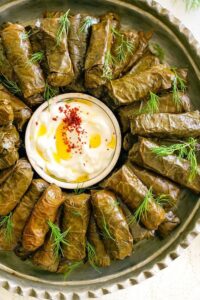
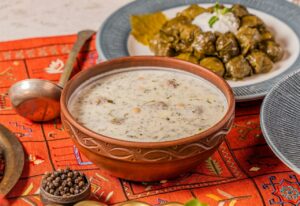
Grape leaves or vegetables stuffed with a seasoned mixture of minced meat, rice, and herbs. The grape-leaf version, wrapped in small, neat cylinders and simmered until tender, is the most iconic, but eggplant, pepper, and tomato dolma variations are also very common.
💡 Local tip: Dolma is labor-intensive to make well, so it’s often a dish reserved for guests and family gatherings, a sign you’re being given proper hospitality.
- Dushbara (düşbərə)
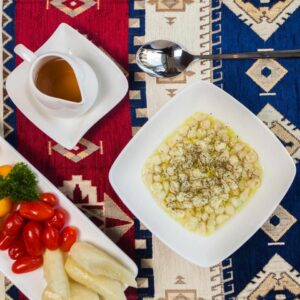
Smaller than a thumbnail, these lamb dumplings are cooked in a transparent, flavorful broth and served with vinegar and dried mint on the side, along with a dollop of yogurt or sour cream. A single bowl may hold hundreds of hand-folded dumplings. Dushbara, which is typically made for weddings, holidays, and family gatherings, is regarded as a labor of love due to the amount of work required.
💡 Local tip: If you get the opportunity to watch dushbara being made in a family kitchen, don’t pass it up. It’s a little theater in and of itself.
- Kebab (Tika & Lula) (kabab)
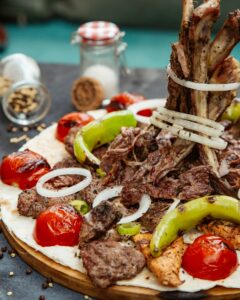
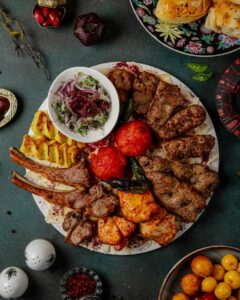
Azerbaijani kebabs are grilled over an open charcoal flame and served with lavash and a pomegranate sauce (Narsharab). While Lula kebab is seasoned ground meat formed into skewers, similar to kofta, Tika kebab is cubed marinated lamb. Both are smoky, simple, and central to any outdoor gathering.
💡 Local tip: Order kebab with a side of fresh herb salad and grilled tomatoes; this is the classic Azerbaijani way to balance the richness of the meat.
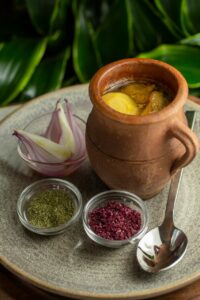
- Piti (piti)
Piti is a delicious stew of lamb, chickpeas, potatoes, and dried plums that is only found in Shaki. It is slowly cooked for hours in a dough-sealed clay pot. It’s served in two stages: first, the broth with bread, then meat and vegetables.
💡 Local tip: Piti is best consumed in Shaki, at one of the city’s classic caravanserai restaurants.
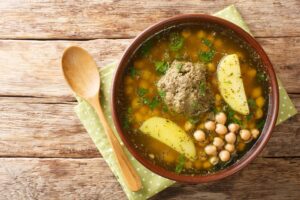
- Kufta Bozbash (kuftə bozbaş)
A hearty soup of meatballs and potatoes, cooked in an aromatic broth with herbs and spices until the meatballs are tender and the potatoes almost dissolve into the liquid. Traditionally served with crusty bread, yoghurt, and lemon wedges.
💡 Local tip: Look for this traditional Azerbaijani comfort cuisine at family-run eateries outside of the capital and on winter menus.
Bread, Flatbreads & Savory Pastries
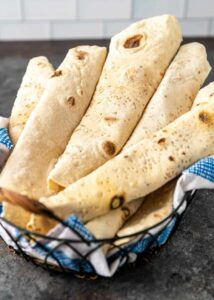
- Lavash (lavaş)
Almost every Azerbaijani meal is accompanied by this thin, soft flatbread, which is used to line the pot for Shah Plov, scoop up stews, and wrap kebabs. It is swiftly baked in a clay oven (Tandir) against the hot wall.
💡 Local tip: It’s worthwhile to look for fresh, still warm lavash from a Tandir at any market or bakery.
- Saj Ichi (sajıçı)
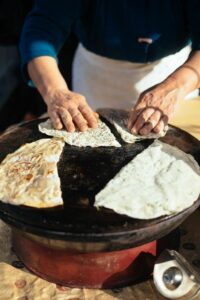
A Saj is a large, thin, crispy flatbread that is cooked on a domed iron griddle. Unlike lavash, Saj Ichi has a firmer, crackly texture and is often eaten on its own or with cheese and herbs.
💡 Local tip: If you can, watch the process as the dough is manually stretched thin over the heated dome.
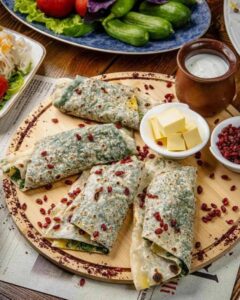
- Qutab (qutab)
A thin, folded flatbread stuffed with minced meat, pumpkin, or greens and baked on a griddle until crispy around the edges. Herb-filled Qutab (Gutab with greens) is particularly popular and is usually coated with melted butter and sumac after cooking.
💡 Local tip: Qutab is commonly sold as street food in Baku’s Old City (Icherisheher) and makes a good quick lunch.
Soups & Salads
- Dovga (dovga)
A sour yoghurt-based soup thickened with rice and packed with fresh herbs including spinach, dill, cilantro, and mint, sometimes with little meatballs added. Dovga originated in Persian cuisine but has become distinctly Azerbaijani, served hot or cold depending on the season.
💡 Local tip: Cold Dovga in the summer is a great way to cool off after a long day of Plov and kebabs.
- Coban Salati (çoban salatı / “shepherd’s salad”)
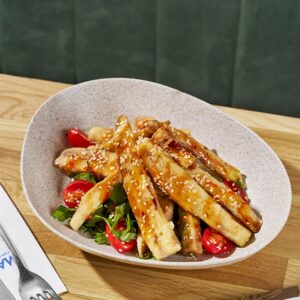
A simple, vibrant salad of sliced tomatoes, cucumbers, onion, and fresh herbs topped with lemon juice or pomegranate syrup (Narsharab). Found at almost every Azerbaijani meal as a counterbalance to richer dishes.
💡 Local tip: If you’re given a choice of dressing, choose Narsharab because the tartness of pomegranate is particularly Azerbaijani.
- Badimcan Salati (badımcan salatı / eggplant salad)
Roasted eggplant mashed with bell peppers and garlic, similar to smoky baba ganoush but with a distinct Azerbaijani flavor. Typically served cold as an appetizer.
💡 Local tip: An excellent vegetarian choice if you want to stray away from the meat-heavy basis of the dish.
Sweets & Festive Pastries
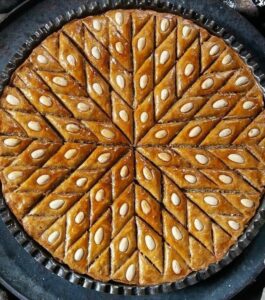
- Baklava (paxlava)
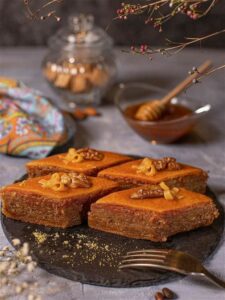
Layers of thin pastry filled with ground walnuts and soaked in honey or sugar syrup, cut into distinctive diamond shapes. Azerbaijani baklava is an essential part of festive meals, particularly during Novruz, the Persian-rooted spring new year festival.
💡 Local tip: Baklava in Azerbaijan is sometimes more gently scented with cardamom or saffron than Turkish or Greek versions, so compare if you’ve tasted baklava abroad.
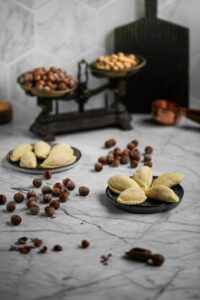
- Shekerbura (şəkərbura)
A crescent-shaped pastry filled with a delicious mixture of ground almonds and powdered sugar, hand-pinched into an ornate ornamental edging. Shekerbura, a symbolic food of Novruz, is traditionally prepared in big batches by families before the holiday.
💡 Local tip: If you travel around the spring equinox (March 20-21), look for Shekerbura, which is related directly to the Novruz event and rarely seen outside of that season.
- Shor Gogal (şor qoğal)
A spiced, layered pastry filled with a savory blend of herbs and spices that, like Baklava and Shekerbura, is a Novruz staple. Despite the name’s association with sweets, Shor Gogal is more savory and aromatic than syrupy.
💡 Local tip: The three Novruz pastries – Baklava, Shekerbura, and Shor Gogal—are traditionally displayed together on a decorative tray called a Khoncha.\

Tea Culture: The Heart of Azerbaijani Hospitality
In Azerbaijan, tea is not an addition to hospitality; it is hospitality. There is a saying that a guest should never be permitted to leave a house without having had at least one cup. Understanding tea culture is fundamental to understanding Azerbaijani social life.
The Samovar and the Armudu Glass
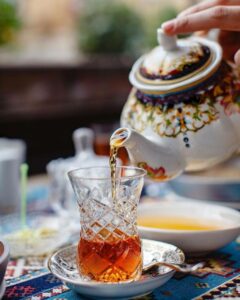
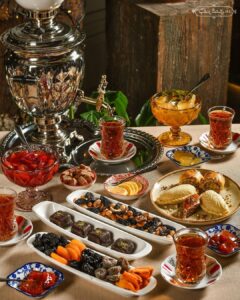
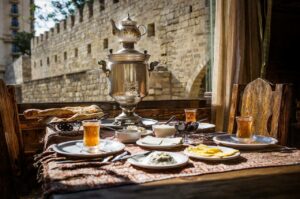
Tea is usually made in a Samovar, a tall metal urn that keeps water hot for hours and served in an Armudu (literally “pear-shaped” glass). The shape isn’t cosmetic; it keeps the tea hot at the bottom while the wider top cools enough to drink right away.
How It Is Actually Drunk
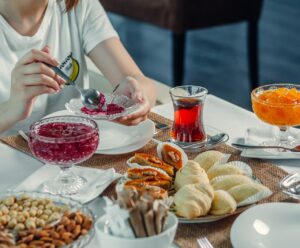
Azerbaijanis typically don’t stir sugar into their tea. Instead, a sugar cube is held between the teeth or dipped briefly into the glass, and the tea is sipped through it – a habit said to date back to fears of poisoning among medieval rulers, who could taste-test a dunked cube before their guests drank. Tea is served strong and black, usually with lemon, and almost always with a small selection of jams like cherry, walnut, fig, or quince, placed on the table rather than mixed in.
Chaykhana: The Tea House
Every town in Azerbaijan has at least one chaykhana, or tea house, which is traditionally a male social area where men come to sip tea, play backgammon, and speak for hours. The term literally means “tea room,” and the institution is as common in Azerbaijani daily life as the bar is in Britain.
| 🍵 Tea Etiquette to Know
· Tea is usually offered when you visit a home; taking it is the polite (and expected) answer. · Sugar cubes are dipped or bitten rather than swirled into the glass. · When accepting the glass, hold it with both hands as a modest expression of respect. · Jam is consumed alongside tea, usually with a small spoon, rather than incorporated into the cup. · Tea is offered before the meal and again at the conclusion; expect a second round. |
Azerbaijani Wine: An Ancient and Underrated Tradition
Wine is significantly less associated with Azerbaijan globally than with neighboring Georgia, yet the country has a strong winemaking heritage that dates back thousands of years along the same South Caucasian wine belt. Azerbaijan’s wine culture was banned for much of the twentieth century, but is gradually reviving, particularly in the districts of Ganja, Shamakhi, and Gabala.
Key Wine Regions
- Ganja – historically the heart of Azerbaijani viticulture, recognized for powerful reds
- Shamakhi – one of the oldest wine-producing areas in the country, has been recorded in historical accounts for ages.
- Gabala – a newer hub of modern Azerbaijani wineries with open tasting rooms for guests.
What to Expect
Azerbaijani wine leans toward powerful reds created from regional grape types, as well as more familiar ones such as Saperavi (shared with Georgia) and Matrasa, a native red grape used in some of the country’s most well-known brands. Because Azerbaijan is a Muslim-majority country, wine culture is more understated and less common at the table than in Georgia – it appears at restaurants, hotels, and wineries rather than as an everyday household staple, but it is far from absent, especially in urban and tourist-oriented settings.
For visitors interested in wine tourism, Georgia remains the more developed destination in the South Caucasus, but an increasing number of Azerbaijani wineries in Gabala and Ismayilli now offer interesting tastings and excursions, which are frequently accompanied by the country’s mountain landscape.
Curious about the wine side of the Caucasus too? Read our Georgian Wine Guide for a deeper dive into the region’s most famous wine tradition.
Food & Festive Traditions
Novruz: The Spring New Year
Novruz, the Persian-rooted celebration of the spring equinox, is Azerbaijan’s most important food-centered holiday. Families spend days preparing Baklava, Shekerbura, and Shor Gogal, displaying them on a decorated tray known as a Khoncha alongside symbolic items like wheat sprouts (Sumani), candles, and painted eggs. Sharing these pastries with neighbors and family is an important element of the celebration.
Weddings and Hospitality Dishes
Certain meals are almost exclusively saved for festivities; Shah Plov and Dushbara are two examples, considering the time and skill necessary to prepare them effectively. Serving a labor-intensive dish to a guest is a straightforward, physical way to show respect in Azerbaijani culture.
The Guest Is Sacred
One notion recurs throughout Azerbaijani food culture: hospitality is shown via food and tea rather than just words. A guest, no matter how unexpected, is fed first and generously. Declining food outright can be considered disrespectful; taking a small taste, even if you’re full, is preferable.
Where to Try Azerbaijani Food
In Baku
- Firuze Restaurant – central Baku, known for Plov and Dolma in a traditional setting
- Restaurants in Icherisheher (Old City) – for Qutab, Lavangi, and casual Azerbaijani street food
- Mugam Club – live with traditional music alongside kebabs and regional specialties
In Shaki
- Caravanserai restaurants – the only place to eat Piti exactly as it’s meant to be served
In Gabala & Ismayilli
- Local wineries with tasting rooms – for a first taste of Azerbaijani wine alongside mountain views
Frequently Asked Questions – Azerbaijan Cuisine
Is Azerbaijani food spicy?
Generally, no. Azerbaijan cuisine relies on herbs, saffron, dried fruit, and sour notes like pomegranate rather than chili heat. It’s aromatic and rich rather than spicy in the hot-pepper sense.
Is alcohol available in Azerbaijan?
Yes. Azerbaijan is a secular, majority-Muslim country, and alcohol – including local wine and beer – is widely available in restaurants, hotels, and shops in Baku and other cities. It may be less visible in smaller, more traditional towns.
What should vegetarians know before visiting?
Azerbaijan cuisine is heavily meat-focused, but vegetarian options do exist – Vegetable Dolma, Badimcan salati, herb-filled Qutab, and various salads are all naturally plant-based. It’s worth communicating dietary needs clearly, as meat is the default in most dishes.
What’s the difference between Azerbaijani and Georgian cuisine?
The two are distinct despite sharing a region. Azerbaijani food draws more heavily on Persian and Turkish influence – saffron rice, dolma, kebabs, and tea culture. Georgian food leans on its walnut sauces, cheese-filled bread, and an ancient, central wine tradition. Visiting both side by side is one of the most rewarding ways to understand the wider Caucasus.
Plan Your Azerbaijani Food Journey
Azerbaijani food rewards those who venture outside Baku’s restaurant scene — a bowl of piti at Shaki, a drink of tea at a roadside chaykhana, and a wedding-style shah plov at a family house. A trip to Azerbaijan combined with visits to neighboring Georgia and Armenia provides a comprehensive picture of how three interconnected cuisine cultures may taste so distinct.
→ Explore Caucasus tours with Caucasus Trip
→ Read our Georgian Food Guide for a full regional comparison
→ Contact us for a tailor-made Caucasus itinerary
About Caucasus Trip
Caucasus Trip is a family-run travel agency based in Tbilisi, Georgia, specializing in private tours, car rentals, and tailor-made experiences across Georgia, Armenia, and Azerbaijan.

Comment (0)