
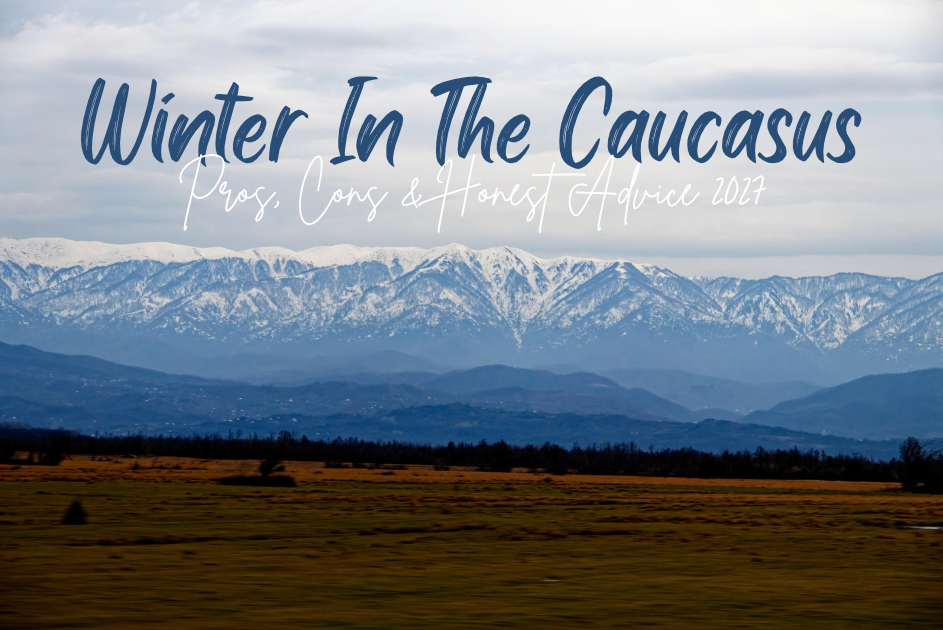
Short answer: yes, for the right kind of trip. Winter in Georgia, Armenia and Azerbaijan means snowy mountains, empty sights, cheap accommodation, hot springs, hearty food and a long festive season. It also means closed mountain passes, short days, cold nights and travel plans that need a little flexibility.
Winter is not the best season for everyone. If your heart is set on high-mountain hiking, Tusheti or Khevsureti, you will have to wait until summer. But if you want skiing, cities without crowds, wine bars, and a more local atmosphere, winter in the Caucasus is the best option. This guide lays out the pros and cons honestly so you can decide.
Planning a winter trip? See our 3-Day Ski Tour in Georgia, our Georgia tours, and our car rental service.
The Quick Verdict
| Is winter right for you?
Go in winter if you want: skiing or snowboarding, lower prices, quiet cities, festive traditions, thermal baths, winter food and wine, and snowy scenery. Wait for another season if you want: high-mountain hiking, remote regions such as Tusheti and Khevsureti, long daylight hours, or a rigid itinerary with no room for weather delays. The best months: late December to January for festive atmosphere and snow; late January to early March for the most reliable skiing. |
The Pros: Why Winter Can Be the Best Time to Go
1. Lower prices and fewer crowds
Winter is the off-season across most of the Caucasus. Accommodation is noticeably cheaper than in summer, there is less pressure on transport, and popular sights such as Tbilisi’s Old Town, Sighnaghi and Kakheti’s wineries are far quieter. You can often travel more spontaneously, because you are not competing with peak-season crowds for rooms and tables.
The exception: ski resorts and the New Year holiday period. Prices and demand rise sharply around December 31 to mid-January, particularly in Gudauri and Bakuriani, so book early or travel in late January or February instead.
2. Skiing and snow sports at a fraction of Alpine prices
Georgia has four government-run ski resorts (Gudauri, Bakuriani, Mestia and Goderdzi), and the season is scheduled to start on December 20, 2026. A day lift pass costs roughly 20-35 USD, equipment hire is around 20 USD, and the slopes are often quiet. Beyond skiing, you can try snowshoeing, husky and samoyed sledding, snowmobile and ATV trips, and the scenic Kobi-Gudauri cable car.
Azerbaijan has two modern resorts, Shahdag and Tufandag, and Armenia’s main winter resort, Tsaghkadzor, is only about an hour from Yerevan. If you want the full comparison, read our guide to skiing in Georgia.
→ Read: Skiing in Georgia, Gudauri vs Bakuriani vs Mestia vs Goderdzi
3. The cities are comfortable in winter
Cities in the Caucasus are mild compared with the mountains. Tbilisi typically sees daytime highs of around 2-8 degrees Celsius in December to February, with nights close to freezing, and often has clear blue skies. Snow in Tbilisi is rare and melts quickly. Yerevan sits in the Ararat Valley, where winters are usually mild with little snow, and Baku is milder still, at roughly 2-8 degrees with occasional rain and very rare snow. For many travelers, a winter city break is much more pleasant than a hot, crowded summer one.
4. Winter food, wine and hot water
Caucasian cuisine is made for cold weather. Think khachapuri, khinkali, chikhirtma and lobio in Georgia, khash and harissa in Armenia, and piti and plov in Azerbaijan. Georgia adds mulled qvevri wine at Tbilisi’s Christmas markets. Cold weather is also the perfect time for the sulphur baths of Tbilisi and the natural hot springs of western Georgia, where the contrast between hot water and cold air is half the fun.
More on the food: Georgian Food Guide, Armenian Cuisine and Azerbaijani Cuisine.
5. A long, authentic festive season
Georgia celebrates twice. New Year is the big party, and Orthodox Christmas follows on January 7. Several traditions run through the winter, and visitors are welcome to watch.
| Date (2026/27) | What happens |
| Dec 16 – Jan 20 | Christmas lights and markets in Tbilisi |
| Dec 20 | Ski season scheduled to begin at Georgia’s four state-run resorts |
| Dec 31 – Jan 2 | New Year’s Eve (the biggest night, with fireworks in Tbilisi), New Year’s Day and Bedoba |
| Jan 6 | Armenian Christmas |
| Jan 7 | Orthodox Christmas in Georgia, with the Alilo procession in Tbilisi, Kutaisi and other cities |
| Jan 14 | Orthodox (Old) New Year |
| Jan 19 | Epiphany, with the Natlisgheba ice-plunge ritual on Paravani Lake |
| Feb 14 | Lamproba in Svaneti, a night of bonfires beside family graves |
6. Snowy landscapes and photography
Svan towers in Mestia dusted with snow, frozen waterfalls in the Dariali Gorge, snowy forests near Tbilisi, the frozen Javakheti plateau (nicknamed the Georgian Arctic), snowy Borjomi and frosted vineyards in Kakheti are all at their most atmospheric in winter. Clear winter air often gives better visibility than the summer haze.
The Cons: What to Be Prepared For
1. Mountain roads and regions close
This is the biggest drawback. High passes close in winter, which makes it impossible to reach places such as Tusheti and Khevsureti in Georgia. The roads to Kazbegi and Svaneti normally stay open, but closures happen. The Georgian Military Highway can shut for anything from a few hours to a few days when avalanche risk is high, and the road to Mestia sometimes closes during snowstorms.
Armenia has its own mountain passes that close temporarily after heavy snow, and Azerbaijan’s mountain roads, such as the route from Quba to Khinalug, can be blocked by snowfall. In the Khinalug area, winter temperatures can fall as low as -25 degrees Celsius.
2. The hiking season is over
Summer hiking in the Greater Caucasus runs from early June to around mid-October. In winter, popular trails such as Juta and Abudelauri are closed, and Azerbaijan’s trails near Khinalug, Laza and Shahdag are snow-covered. Lowland trails, for example around Borjomi, Meskheti and Lagodekhi, may still be walkable in early winter, and guided snowshoe hikes are an excellent alternative.
3. Short days and cold nights
Daylight is limited, so plan sightseeing and transport carefully and avoid long drives after dark. Mountain towns are properly cold: Mestia can reach about -20 degrees Celsius in January. In cities, check that your accommodation has reliable heating, because some places use radiators rather than central heating.
4. Some businesses close for the season
Tbilisi and the main destinations stay open, but some remote regions go quiet. Racha, for instance, nearly shuts down, and some small wineries, restaurants, and guesthouses close in winter. Some smaller businesses also close from around December 31 until mid-January, although there are always plenty of restaurants and cafes open, especially in the ski resorts.
5. Weather can disrupt your plans
A heavy snowstorm in 2025 shut down much of western Georgia for almost a week, halting trains and buses and diverting flights from Batumi and Kutaisi. This is unusual, but it is a reminder to build a buffer day into your itinerary, particularly before an international flight.
6. Winter driving takes experience
Winter tires are mandatory on mountain roads in Georgia from December 1 to March 1, and a 4WD vehicle is strongly recommended. Roads can be icy, and conditions change quickly. If you are not confident driving in snow, a private driver or a guided tour is the safer choice.
| 🚗 Winter Driving with Caucasus Trip
Our SUVs suit mountain roads, and our rental service covers Georgia only. Winter conditions change what you need, so please contact us before booking so we can confirm vehicle suitability, winter equipment, and your route for your dates. Prefer not to drive? Our 3-Day Ski Tour in Georgia includes private transfers, accommodation, a ski pass, equipment, and lessons. |
→ Browse SUV rental options in Georgia
→ See the 3-Day Ski Tour in Georgia
Winter in Georgia, Armenia and Azerbaijan Compared
| Georgia | Armenia | Azerbaijan | |
| City weather | Tbilisi: mild, around 2- 8 °C by day, rarely below freezing | Yerevan: mild with little snow, colder than Tbilisi at night | Baku: around 2-8 C, rainy, very rare snow |
| Mountains | Heavy snow in Kazbegi, Svaneti and Racha from December to March | Thick snow in Tsaghkadzor, Jermuk and Shirak, down to -10 C or lower | Snowy in Shahdag, Gabala and Khinalug; Khinalug can reach -25 C |
| Skiing | Gudauri, Bakuriani, Mestia, Goderdzi | Tsaghkadzor, about an hour from Yerevan | Shahdag and Tufandag |
| Highlights | Christmas markets, sulphur baths, Kakheti wineries, Kazbegi, ski resorts | Cosy Yerevan, museums and cafes without queues, snowy monasteries | Baku’s Old City and architecture, mountain resorts |
| Watch out for | Military Highway closures, Tusheti and Khevsureti closed, holiday prices | Mountain passes closed after snow, icy roads | Mountain roads blocked after heavy snow |
Month by Month: Which Winter Month Is Best for Georgia?
| Month | What to expect | Best for |
| Early December | Quieter, lower prices, Christmas lights switch on from mid-month; ski season starts on December 20 if snow allows | Budget travel, city breaks |
| Late December to mid-January | Festive peak, with New Year and Christmas events, higher prices and crowds at ski resorts | Festivals and traditions |
| Late January to February | Most reliable snow, quieter slopes, lower prices once holidays end; Lamproba on February 14 | Skiing, snowshoeing, mountain scenery |
| March | Snow still on high slopes but conditions get unpredictable as spring approaches; early spring in the cities | Late-season skiing at higher resorts, fewer visitors |
Sample Winter Itineraries
3 days: Ski trip to Gudauri
- Day 1 – Discover Tbilisi
- Day 2 – Mtskheta, Ananuri & Gudauri
- Day 3 – Gudauri & Return to Tbilisi
5 days: Tbilisi, Kazbegi & Kakheti
- Day 1: Tbilisi Old Town, sulphur baths, Christmas markets (December to mid-January), wine bars
- Day 2-3: Mtskheta, Ananuri, Gudauri & possibly Kazbegi
- Day 4: Kakheti wine and gastronomy region, cellar tastings and Sighnaghi without the crowds
- Day 5: Mtskheta and departure
8 days: Georgia and Armenia
Best for travelers interested in discovering two neighboring Caucasus countries, combining mountain scenery, ancient monasteries, culture and gastronomy. Spend four days in Georgia, then take the overnight train or a marshrutka to Yerevan for cafes, museums and snowy monasteries. Allow extra time in case mountain passes close.
- Day 1 – Arrival in Tbilisi
- Day 2 – Tbilisi City Tour
- Day 3 – Mtskheta, Ananuri & Gudauri
- Day 4 – Gudauri & Kazbegi – Tbilisi
- Day 5 – Tbilisi to Armenia: Haghpat & Dilijan
- Day 6 – Dilijan, Lake Sevan & Yerevan
- Day 7 – Yerevan & Garni–Geghard
- Day 8 – Departure from Yerevan
14 Days: Grand Caucasus Winter Tour – Georgia, Armenia & Azerbaijan
- Day 1 – Arrival in Baku – City Tour
- Day 2 – Absheron Peninsula – flight to Tbilisi
- Day 3 – Tbilisi City Tour
- Day 4 – Kakheti: Wine & Culture
- Day 5 – Mtskheta, Ananuri & Gudauri
- Day 6 – Gudauri & Kazbegi
- Day 7 – Gudauri to Kutaisi
- Day 8 – Kutaisi to Mestia: Svaneti
- Day 9 – Mestia & Svaneti
- Day 10 – Mestia to Tbilisi
- Day 11 – Tbilisi to Armenia: Haghpat, Lake Sevan & Dilijan
- Day 12 –Yerevan
- Day 13 – Garni & Geghard
- Day 14 – Yerevan-departure
→ Contact us to plan a tailor-made winter itinerary
Practical Tips for Winter Travel in the Caucasus
- Pack layers, waterproof shoes, thermals, a hat, and gloves. In cities, jeans and a warm coat are usually enough. Clothes are easy to buy locally if you forget something.
- Be flexible. Leave slack in your schedule and add a buffer day before an international flight.
- Check road conditions before driving. In Georgia, GeoRoad is a useful source for closures and safety information.
- Travel insurance is required for entering Georgia as of January 1, 2026, and should cover winter sports if you plan to ski. Check the current rules before you go.
- Plan transport around daylight. Avoid long marshrutka journeys after dark.
- Book New Year accommodation and ski lessons early. Both fill up.
- Carry some cash. Smaller guesthouses and mountain cafes may not take cards.
Frequently Asked Questions: Winter in the Caucasus
- Is it worth visiting the Caucasus in winter?
Yes, if you are interested in skiing, city breaks, food and wine, festive traditions, or snowy scenery. If your priority is high-mountain hiking or reaching remote regions such as Tusheti and Khevsureti, summer and early autumn are better.
- What is the best winter month to visit Georgia?
Late December and January are best for festivals and a festive atmosphere. Late January to early March is best for skiing and reliable snow. Early December is the quietest and cheapest time.
- Does it snow in Tbilisi?
Occasionally, but it is rare and usually melts quickly. For reliable snow, head to the mountains: Gudauri, Kazbegi, Bakuriani and Mestia see consistent snow cover from December.
- How cold does it get in the Caucasus in winter?
It varies enormously with altitude. Tbilisi typically ranges from about 0 to 8 degrees Celsius, Baku is similarly mild, and Yerevan is a little colder. In the mountains, it can fall to -20 degrees Celsius or lower, for example in Mestia and the Khinalug area.
- Are roads open in winter?
Main roads are open, including the routes to Kazbegi and Svaneti in Georgia, but temporary closures are common after heavy snow. High passes to Tusheti and Khevsureti close for the season. Always check conditions before you travel.
- Do I need a 4WD in winter?
For mountain roads, yes: a 4WD vehicle with winter tires is strongly recommended, and winter tires are mandatory on Georgia’s mountain roads between December 1 and March 1. For Tbilisi and the main highways, a standard car is usually fine in normal conditions.
- Can I travel between Georgia, Armenia and Azerbaijan in winter?
Yes, with extra flexibility. The overnight train between Tbilisi and Yerevan and the marshrutkas continue to run, though mountain passes can delay road travel. Remember that there is no direct route between Armenia and Azerbaijan, so travel between them always goes through Georgia. It’s only possible to travel from Azerbaijan to Georgia; not the other way around.
Plan Your Winter Trip to the Caucasus
Winter in the Caucasus is not the season most visitors think of first, and that is exactly what makes it appealing: lower prices, quieter sights, smoky wine bars, snow-dusted towers and a festive calendar that stretches from mid-December to February. Choose the right month, pack warm layers, keep your schedule flexible, and winter can be the most rewarding time to visit.
Caucasus Trip can help you plan a winter itinerary, arrange private transfers or a guide, and advise on the safest way to reach the mountains for your dates.
→ Explore Georgia tours with Caucasus Trip
→ See the 3-Day Ski Tour in Georgia
→ Rent a car for your winter trip
→ Contact us to plan your winter itinerary
About Caucasus Trip
Caucasus Trip is a family-run travel agency based in Tbilisi, Georgia, specializing in private tours, car rentals, and tailor-made experiences across Georgia, Armenia, and Azerbaijan.

Comment (0)