
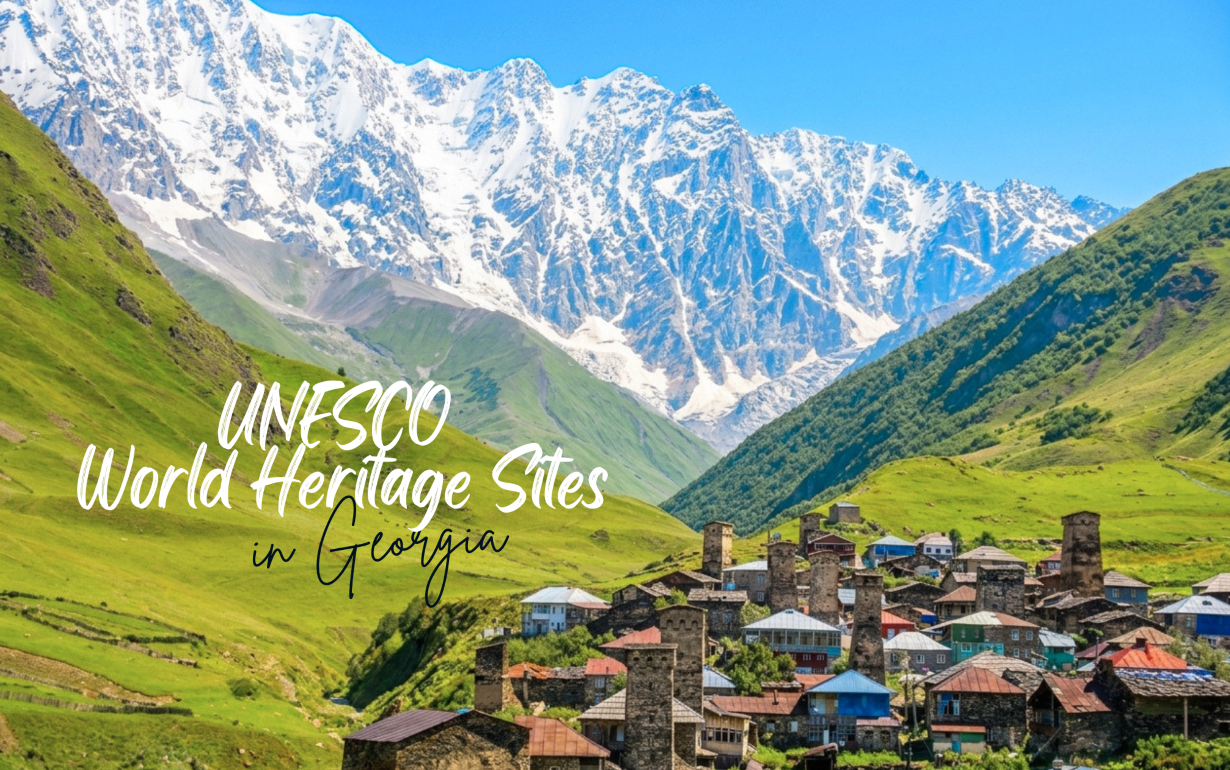
Georgia is one of the oldest Christian nations on earth, the birthplace of wine, and home to some of the highest villages in Europe. It is also home to four UNESCO World Heritage Sites: three cultural landmarks and one natural wonder. Together they tell the story of a country that has kept its identity for thousands of years, from the cathedrals of ancient Mtskheta to the stone towers of Svaneti and the misty rainforests of the Black Sea coast.
This guide covers UNESCO World Heritage Sites in Georgia, what makes them special, how to visit, and how to combine them into one unforgettable trip. At the end, you will also find Georgia’s living UNESCO traditions, a list of sites waiting to join the list, and answers to the questions travelers ask us most.
Planning a heritage trip? Our team of local experts designs private, tailor-made cultural tours in Georgia that link all four UNESCO sites at a pace that suits you.
Georgia’s UNESCO World Heritage Sites at a Glance
Georgia joined UNESCO in 1992 and ratified the World Heritage Convention the same year. Since then, four properties have been inscribed on the World Heritage List.
| UNESCO site | Region | Inscribed | Type | How long to allow |
| Historical Monuments of Mtskheta | Mtskheta-Mtianeti | 1994 | Cultural | Half day from Tbilisi |
| Gelati Monastery | Imereti (near Kutaisi) | 1994 | Cultural | Half day to full day |
| Upper Svaneti | Samegrelo-Zemo Svaneti | 1996 | Cultural | 2 to 4 days |
| Colchic Rainforests and Wetlands | Guria, Adjara, Samegrelo-Zemo Svaneti | 2021 | Natural | 1 to 2 days |
1. Historical Monuments of Mtskheta: Georgia’s Ancient Spiritual Capital
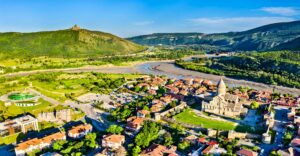
Just 20 km from Tbilisi, Mtskheta was the capital of the ancient Kingdom of Iberia and is still the spiritual heart of Georgian Orthodoxy. According to tradition, it is where Georgia adopted Christianity as its state religion in 337 CE. That makes it an easy and rewarding day trip from Tbilisi.
The UNESCO listing covers three monuments:
- Svetitskhoveli Cathedral: the 11th-century “Living Pillar” cathedral, the burial place of Georgian kings and, according to legend, the resting place of Christ’s robe. It is the most important church in the country.
- Jvari Monastery: a 6th-century church on a hilltop above the meeting of the Mtkvari and Aragvi rivers. Its stark, perfectly proportioned design influenced church architecture across the Caucasus, and the view alone is worth the climb.
- Samtavro Monastery: a working convent beside the cathedral, with roots in the 4th century and closely tied to the story of St. Nino, who brought Christianity to Georgia.
Visitor tips: Arrive early to enjoy Svetitskhoveli before the tour groups. Dress modestly (shoulders and knees covered; women should carry a scarf for church interiors). Combine Mtskheta with a stop for a traditional supra lunch or a wine tasting nearby.
2. Gelati Monastery: Georgia’s Golden Age in Stone and Gold
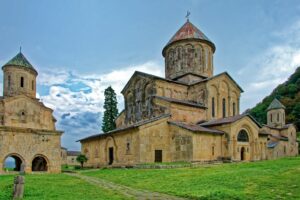
Founded in 1106 by King David IV the Builder, Gelati Monastery near Kutaisi was the crown of Georgia’s medieval Golden Age. It was more than a church. It was a great academy, often called a “second Jerusalem” and “new Athens” by its admirers, where scholars translated, taught, and copied manuscripts.
Inside, the 12th-century apse mosaic of the Virgin and Child is among the finest Byzantine-era mosaics anywhere in the Caucasus, set among vivid medieval frescoes. King David himself is buried at the monastery’s southern gate, so that all who enter would walk over his tomb as a sign of humility.
Gelati was inscribed in 1994 (originally together with Bagrati Cathedral, which was removed from the listing in 2017, so the property now stands as Gelati Monastery alone).
Visitor tips: Pair Gelati with Kutaisi’s Bagrati Cathedral, the Green Bazaar and the nearby canyons and caves of Imereti. Kutaisi also makes a convenient starting or ending point for a trip, thanks to its international airport.
3. Upper Svaneti: Medieval Villages in the Caucasus Mountains
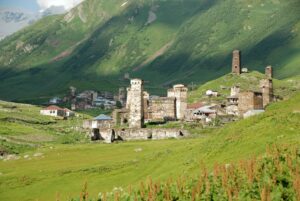
If you want to see how Georgia lived centuries ago, go to Upper Svaneti. Cut off from the rest of the country by high passes for much of its history, this remote highland region kept its language, customs, and architecture almost intact. UNESCO inscribed it in 1996 for its remarkable mountain landscape and its unique villages of Svan towers, tall defensive stone houses built mostly between the 9th and 12th centuries.
What to experience:
- Mestia: the regional hub, with its skyline of medieval towers, the Svaneti Museum of History and Ethnography, and a good base of guesthouses and restaurants.
- Ushguli: a cluster of four villages at the foot of Mount Shkhara (5,193 m, Georgia’s highest peak). At roughly 2,100 m, it is widely described as one of the highest permanently inhabited settlements in Europe.
- Hiking: Multi-day trails link the villages, glaciers and alpine lakes, including the classic Mestia to Ushguli trek.
- Svan cuisine: try kubdari (spiced meat pie) and Svan salt, and warm up with local home-brewed spirits.
Visitor tips: The best season is June to September, when roads and trails are open, and the weather is stable. Allow at least two nights, and travel with a private driver or guide, as mountain roads can be demanding.
4. Colchic Rainforests and Wetlands: Georgia’s Natural UNESCO Site
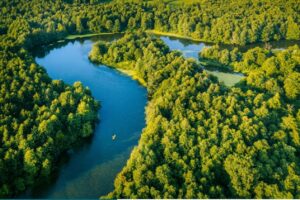
In 2021, Georgia gained its first natural UNESCO World Heritage Site: the Colchic Rainforests and Wetlands. Spread across Guria, Adjara and Samegrelo-Zemo Svaneti along the Black Sea coast, this serial site protects what remains of the ancient temperate rainforests that once covered the whole Colchis region, a landscape that survived the ice ages as a refuge for plants and animals.
What makes it exceptional:
- Ancient rainforests with a humid, almost subtropical atmosphere, rising from sea level to around 2,500 m
- Rare and endangered species, in forests and wetlands rich in biodiversity
- Wetlands such as those in Kolkheti National Park, home to migratory birds and the critically endangered Colchic sturgeon
Visitor tips: Combine it with a Black Sea stay in Batumi or Kobuleti. Spring and early autumn are ideal for hiking and birdwatching, and boat trips on the wetlands are a quiet, atmospheric way to see the coastal ecosystem.
Georgia’s Intangible Cultural Heritage: Living UNESCO Traditions
Georgia’s UNESCO story is not only about monuments. Four living traditions are recognized on UNESCO’s Intangible Cultural Heritage lists, and you can experience each one on a trip:
- Georgian polyphonic singing: hauntingly beautiful multi-part harmonies, performed at festivals, restaurants and village feasts.
- Ancient Georgian qvevri winemaking: an 8,000-year-old method of fermenting wine in buried clay vessels. Visit a family cellar in Kakheti to taste it at the source.
- The three writing systems of the Georgian alphabet: a unique script still in everyday use.
- Chidaoba: traditional Georgian wrestling, blending sport, ritual and folklore.
Georgian Sites on the Tentative List
Georgia has 14 properties on its UNESCO Tentative List, the first step toward future inscription. Several are well worth visiting today, including Vardzia cave monastery, David Gareja monastery complex, the Dmanisi archaeological site (home to some of the oldest hominid remains found outside Africa), Alaverdi Cathedral and the Ananuri fortress complex.
How to Visit Georgia’s UNESCO Sites: Sample 7-Day Route
- Day 1: Arrive in Tbilisi, evening walk through the Old Town.
- Day 2: Mtskheta (Svetitskhoveli, Jvari, Samtavro), then wine and lunch.
- Day 3: Drive to Kutaisi and visit Gelati Monastery.
- Days 4 to 5: Mestia and Ushguli in Upper Svaneti.
- Day 6: Down to the coast for the Colchic wetlands or forests near Batumi.
- Day 7: Relax in Batumi before departure.
This is only a template. As a local travel agency in Tbilisi, we adapt every itinerary to your dates, interests, and travel style, whether that means families, couples, photographers, or small private groups. If you prefer total freedom, our car rental in Georgia option puts you behind the wheel.
Frequently Asked Questions About UNESCO Sites in Georgia
- How many UNESCO World Heritage Sites are there in Georgia?
Georgia has four: the Historical Monuments of Mtskheta, Gelati Monastery, Upper Svaneti, and the Colchic Rainforests and Wetlands. Three are cultural, and one is natural.
- Which UNESCO site in Georgia can I visit as a day trip from Tbilisi?
Mtskheta is the easiest, just about 20 km from the capital. Gelati can also be done as a long day trip or, better, with a night in Kutaisi.
- What is the best time to visit Georgia’s UNESCO sites?
Mtskheta and Gelati are great year-round. Upper Svaneti is best from June to September. The Colchic forests are most beautiful in spring and early autumn.
- Do I need a guide to visit Upper Svaneti?
You can travel independently, but a local driver or guide makes mountain roads safer and brings the towers, traditions, and history to life.
- Is there a dress code at Georgian churches?
Yes. Shoulders and knees should be covered, and women are usually expected to wear a headscarf inside. Carrying a light scarf is enough.
Experience Georgia’s UNESCO Heritage with Caucasus Trip
From the cathedrals of Mtskheta to the stone towers of Svaneti and the quiet rainforests of Colchis, Georgia’s UNESCO sites are a journey through time, tradition, and untouched nature. We are a family-run, Tbilisi-based travel agency, and we would love to plan yours.
Explore our Georgia tours or contact us for a free tailor-made itinerary.

Comment (0)