
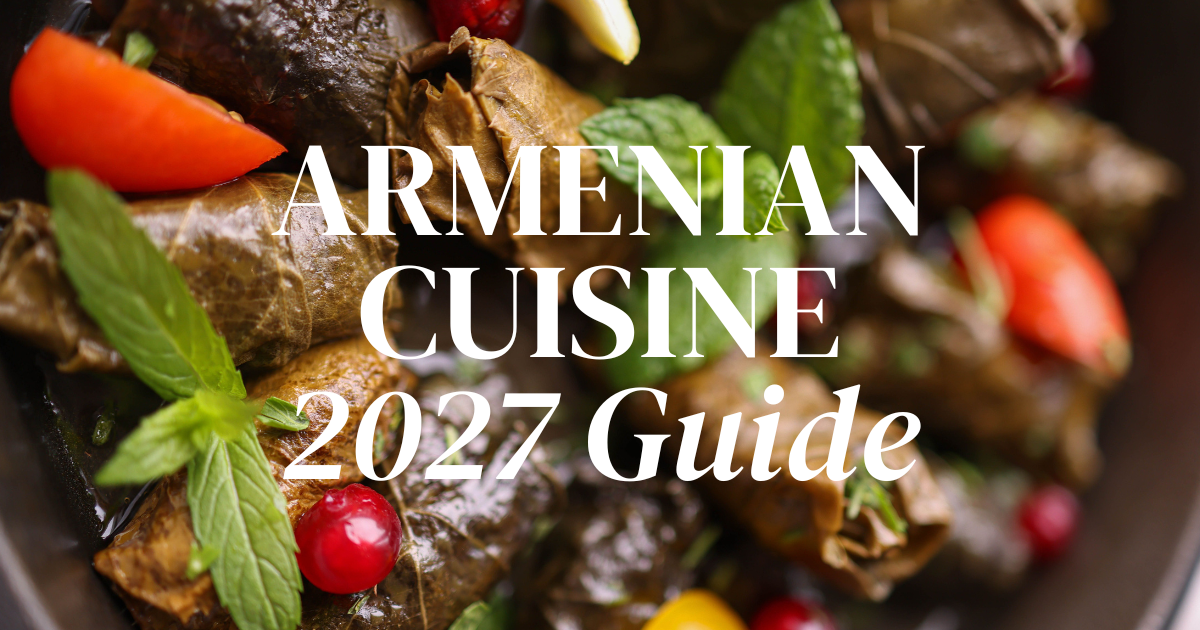
Armenian cuisine is based on a few things done well: bread baked in a clay oven, meat roasted over charcoal, grape leaves wrapped around rice and herbs, thick yoghurt, fresh cheese, and a table that always appears to hold more than anyone ordered. It’s hearty, herb-forward, and quietly refined, with some of the world’s oldest cuisine and wine traditions.
This guide covers Armenian dishes worth trying, the traditions behind them (from the UNESCO-recognized flatbread to the early-morning khash ritual), and the wine and brandy culture of a country that boasts the world’s oldest known vineyard.
Visiting Armenia as part of a bigger Caucasus trip? See our Caucasus tours or contact us to plan a route across Georgia, Armenia and Azerbaijan.
What defines Armenian cuisine· Bread: Lavash, a thin flatbread baked in a clay oven, is served at nearly every meal. Its traditional making was inscribed on UNESCO’s Intangible Cultural Heritage list in 2014. · Fire: Khorovats, an Armenian barbecue, is the centrepiece of celebrations and weekend gatherings. · Wrapped and stuffed: dolma (tolma) comes in more than 50 traditional variations. · Grains and dairy: broken wheat (bulgur) is frequently used instead of rice, while yoghurt (madzoon) and fresh cheeses are available everywhere. · Herbs and fruit: fresh herbs, walnuts, apricots and pomegranates are very common in the cuisine. |
Bread & Barbecue: The Heart of the Armenian Table
- Lavash (Լավաշ)
Thin, soft, unleavened flatbread made with flour, water, and salt, and baked on the wall of a clay oven (tonir). Lavash is eaten with almost anything: wrapped around cheese and herbs, used to scoop for stews, or torn at the table. It is more than just a side dish, many Armenians see it as a symbol of hospitality.
Local tip: Watch it being made if you can. The dough is stretched thin and slapped on the oven wall in seconds, and fresh lavash eaten warm tastes nothing like the packaged kind.
- Khorovats (Խորոված)
Armenian barbecue, and the dish most people name first. Chunks of pork, lamb, beef, or chicken are marinated simply with onion and spices, threaded onto flat skewers, and grilled over charcoal. It is served with lavash, fresh herbs, grilled vegetables, and often a glass of wine or vodka. Khorovats is a social dish: a weekend khorovats with family and friends is a fixture of Armenian life.
Local tip: Order a mixed plate and a side of grilled vegetables. Vegetable khorovats (aubergine, tomato, pepper, mushroom) is a good option for vegetarians.
- Basturma (Բաստուրմա)
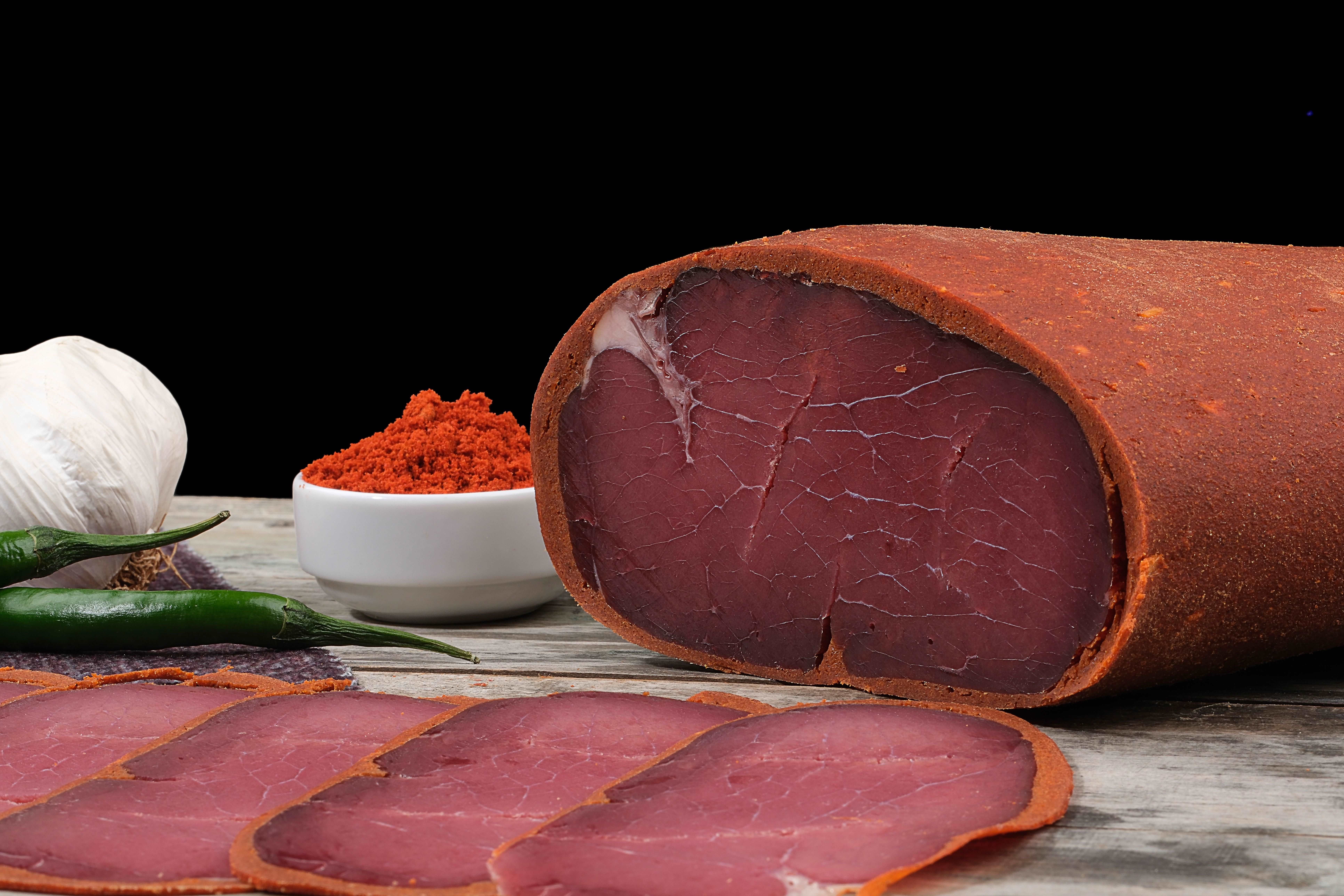
Air-dried, cured beef coated in a pungent spice paste, sliced very thin and eaten as a starter or wrapped in lavash. Rich, garlicky and intensely savoury, it is a staple of the Armenian cold-cuts plate.
Local tip: Pair it with fresh bread, tomatoes and a dry red wine. A little goes a long way.
Stuffed, Slow-Cooked & Festive Dishes
- Dolma (Tolma) (Տոլմա)
Many Armenians call dolma their most characteristic dish. Grape leaves (or cabbage leaves, and in autumn even stuffed apples and quince) are filled with minced meat, rice or bulgur, herbs, and simmered slowly. There are more than 50 traditional variations, and a dolma festival, Uduli, is held in a different part of Armenia each year. Dolma is usually served warm with a spoonful of garlicky yoghurt.
Local tip: Distinguish between stuffed and wrapped versions: wrapped types are sometimes called sarma. Ask for dolma with madzoon on the side.
- Pasuc Tolma (Պասուց տոլմա)
The Lenten version of dolma, made with no meat. Rice, lentils or beans, herbs, and dried fruit are wrapped in grape leaves, often with a touch of lemon. It is vegan and a good example of how Armenian food adapts to the church’s fasting calendar.
Local tip: If you are vegetarian or visiting during Lent, look for pasuc dishes on the menu.
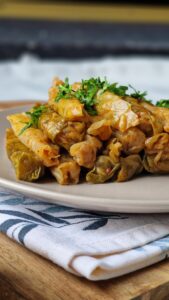
- Harissa (Հարիսա)
Do not confuse this with the spicy chili paste of North Africa. Armenian harissa is a thick, slow-cooked porridge of cracked wheat and meat (traditionally lamb, now more often chicken) that is stirred for hours until the ingredients blend into one creamy mass. It is a ritual festive dish, and its long preparation has made it a symbol of patience and community.
Local tip: Harissa is served with melted butter. Look for it at festivals and traditional restaurants, especially around religious holidays.
- Khash (Խաշ)
A bone broth made from slow-cooked cow’s feet, served with garlic, dried lavash, radishes, and pickles, often with a shot of vodka. Khash is as much a tradition as a dish: a hearty early-morning gathering of friends and family, usually in the colder months. It is an acquired taste, but a memorable cultural experience.
Local tip: Go with locals if you can. A khash morning is a long, convivial affair, not a quick breakfast.
- Ghapama (Ղափամա)
A whole pumpkin stuffed with rice, dried fruit, nuts, and honey, then baked until the filling is sweet and tender. Ghapama is a festive dish and makes a spectacular centerpiece, traditionally served at celebrations and holiday meals.
Local tip: It is often served at holiday tables, so check whether a restaurant makes it to order, especially in autumn and winter.

- Zhingyalov Hats (Ժենգյալով հաց)
A thin flatbread stuffed with a large amount of finely chopped fresh herbs and greens, folded and cooked on a hot griddle until crisp at the edges. It is bright, green and fragrant, and a favourite lighter meal.
Local tip: It is quick, cheap and vegetarian, so it makes an excellent lunch between sightseeing stops.
- Tjvjik (Տժվժիկ)
A rich fried dish of liver and offal cooked with onions and spices. It is a traditional hearty plate in Armenian homes and meat-focused restaurants.
Local tip: Best for adventurous eaters. Order a small portion to share the first time.
Dairy, Soups & Sweets
- Spas (Սպաս)
A tangy yoghurt-and-wheat soup that can be served hot or cold, often flavoured with herbs. Cooling in summer and comforting in winter, spas are among the most characteristic Armenian soups.
Local tip: Try it cold on a hot summer day in Yerevan.
- Madzoon & Armenian Cheeses (Մածուն)
Madzoon is a thick, tangy Armenian yoghurt, and it appears at nearly every meal: with dolma, in soups, as a dip or just with bread. Armenian cheeses (fresh, brined and aged varieties) are equally central to the table, often served with herbs, walnuts and lavash.
Local tip: Visit a local market and buy cheese and herbs for a simple picnic. This is Armenian food at its most straightforward.
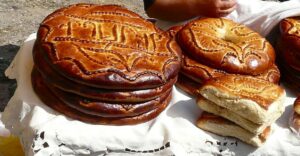
- Gata (Գաթա)
A sweet, buttery bread or pastry, often with a flour, butter, and sugar filling known as khoriz, and sometimes decorated on top. Different towns have their own recipes, and there is even a gata festival. Gata is traditionally eaten with tea or coffee.
Local tip: Buy it fresh from a bakery in the morning and eat it with Armenian coffee.
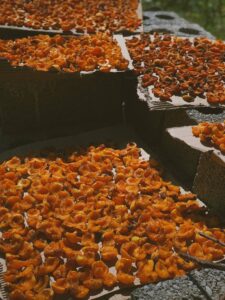
- Apricots & Dried Fruit (Ծիրան)
The apricot is closely tied to Armenian identity and is celebrated across the country. Fresh in summer, dried year-round, and turned into jam, fruit leather, and brandy, it is hard to visit Armenia without eating a lot of it. Walnuts, dried fruit and pomegranates round out the Armenian pantry.
Local tip: June to July is apricot season. Markets overflow with fresh fruit.
Armenian Food Traditions
Lavash and the UNESCO Listing
Armenian lavash-making was added to UNESCO’s Intangible Cultural Heritage list in 2014. The recognition covers more than a recipe: it is the whole tradition of making and sharing the bread, which is typically baked collectively and shared among family and neighbors. Lavash on the table signals welcome.
Dishes with a Meaning
Many Armenian dishes carry symbolism. Harissa stands for patience and community, because it takes hours of stirring and is often prepared together. Khorovats is about time spent with others. Lavash represents hospitality. Eating Armenian food means joining in a ritual, not just consuming a meal.
Festivals Worth Planning Around
- Uduli: a dolma festival held in a different part of Armenia each year.
- Gata festival: a celebration of Armenia’s traditional sweet bread.
- Yerevan Wine Days: held at the end of May, with tastings across the city.
- Areni Wine Festival: held in October in Vayots Dzor, close to the world’s oldest known winery.
Armenian Coffee
Armenian coffee is made in a small, long-handled pot (jezve) from very finely ground beans, brewed slowly and served in small cups with the grounds settling at the bottom. It is sipped slowly and is the usual ending to a meal or a visit. It is closely related to Turkish coffee, and Armenians will tell you theirs is different.
Armenian Wine & Brandy: Ancient Roots, Soviet Detour
The World’s Oldest Known Winery
In the Areni-1 cave complex in Vayots Dzor, about 90 minutes to 2.5 hours south of Yerevan depending on the route, archaeologists uncovered one of the oldest known winemaking sites in the world. Dating to around 4100 BC (more than 6,000 years old), it contained a grape press, fermentation vats and storage jars, along with grape seeds and remains of vines. The cave also held the oldest known leather shoe.
A note on the Georgia-Armenia wine debate: Georgia has evidence of winemaking going back around 8,000 years, while Areni-1 is the oldest known winery facility. Both countries have a legitimate claim to being at the beginning of wine history, and the South Caucasus as a whole is the cradle of it.
Armenian Wine Today
Vayots Dzor is the country’s most exciting wine region today, and the Areni grape, a native red, is its flagship. Native white grapes such as Voskehat and Kangun produce fresh, aromatic wines too. Armenia also makes fruit wines (pomegranate is the most famous) and apricot brandy. A small wine route runs along the road between Areni village and Yeghegnadzor, where small family wineries welcome visitors.
Why Brandy Came First
During the Soviet era, Armenia shifted away from table wine and put its energy into brandy, which is why Armenian brandy (often called cognac) became more famous internationally than Armenian wine. The Yerevan Ararat Brandy Factory was founded in 1877, and brandy tastings remain a popular visit in the capital. Wine is now enjoying a revival, as young winemakers return to indigenous grapes and old vineyards.
| Wine & Brandy Tips
Vayots Dzor is roughly 2 to 2.5 hours south of Yerevan by road, so allow a full day or an overnight stay. Combine a visit to the Areni-1 cave with a tasting at a nearby family winery. Try Areni red and a Voskehat white, and a glass of Armenian brandy after dinner. Visit in October for the Areni Wine Festival, or in late May for Yerevan Wine Days. |
Armenian vs Georgian vs Azerbaijani Food
| Armenian | Georgian | Azerbaijani | |
| Signature dish | Khorovats, dolma, harissa | Khachapuri, khinkali | Plov, dolma, kebab |
| Bread | Lavash from a tonir | Shotis puri, khachapuri | Lavash, saj bread |
| Flavour | Herbs, grilled meat, yoghurt, bulgur | Walnuts, cheese, spices | Saffron, dried fruit, herbs |
| Wine | Areni, old winery, brandy tradition | Qvevri, amber wine | Small but growing wine scene |
| Best for | Grilled meat, wine history, hospitality | Feasts and wine culture | Rice dishes, tea culture |
The three cuisines share ingredients and techniques but taste distinctly different, and tasting all three on one trip is one of the best ways to understand the Caucasus.
Read more: Georgian Food Guide and Azerbaijani Cuisine Guide.
Frequently Asked Questions: Armenian Cuisine
What is the national dish of Armenia?
There is no single official answer, and Armenians enjoy debating it. Khorovats, dolma, harissa, and lavash are all strong contenders, and each represents something different: celebration, home cooking, ritual, and hospitality.
Is Armenian food spicy?
Generally no. Armenian cooking relies on fresh herbs, garlic, onion, and gentle spices rather than chili heat. Armenian harissa is a wheat porridge, not a spicy paste.
Is Armenian food vegetarian-friendly?
Meat is central, but vegetarians have good options: lavash with cheese and herbs, zhingyalov hats, pasuc tolma, vegetable khorovats, yoghurt dishes and salads. Say clearly that you do not eat meat, as some dishes are made with meat broth.
What is the difference between dolma and sarma?
Dolma usually refers to stuffed vegetables, while sarma refers to wrapped leaves, although many Armenians use dolma (tolma) for both.
Where is the oldest winery in the world?
The oldest known winery is the Areni-1 cave complex in Vayots Dzor, Armenia, dating to about 4100 BC.
What is the best time to visit Armenia for food and wine?
Late spring and autumn are ideal. Yerevan Wine Days takes place in late May, apricots ripen in June to July, and the grape harvest and Areni Wine Festival run in autumn.
Plan Your Armenian Food Journey
Armenian cuisine rewards curiosity: a slow khorovats lunch in the countryside, a glass of Areni wine near a 6,000-year-old winery, a morning of lavash baking, a cup of coffee in a Yerevan cafe. It pairs naturally with Georgia, and the two countries are connected by an overnight train and a well-used road across the border.
Caucasus Trip can help you plan a route across Georgia, Armenia and Azerbaijan, with transfers, guides and tastings built in.
→ Explore Caucasus tours with Caucasus Trip
→ Read our guide to getting around the Caucasus
→ Contact us for a tailor-made itinerary
About Caucasus Trip
Caucasus Trip is a family-run travel agency based in Tbilisi, Georgia, specializing in private tours, car rentals, and tailor-made experiences across Georgia, Armenia, and Azerbaijan.

Comment (0)