
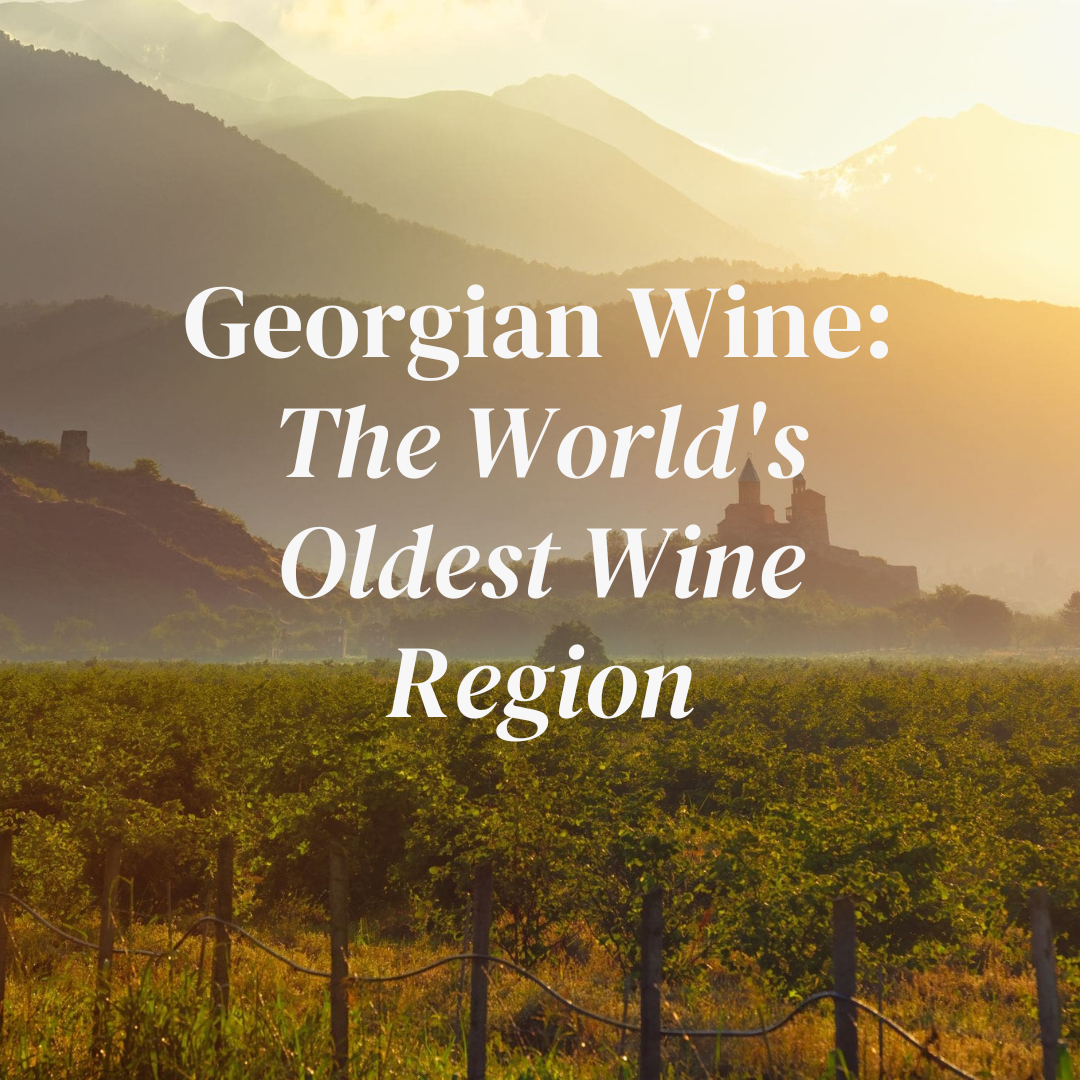
Georgia – Cradle of Winemaking
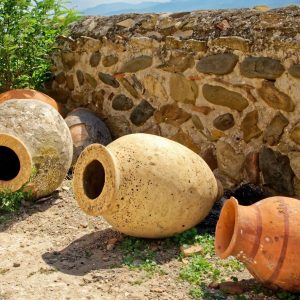
Georgia is recognized as the birthplace of the first wines. Archaeologists discovered grape seeds over 8,000 years old in clay vessels, tracing the world’s earliest developed viticulture back to these lands. For centuries, Georgians have used the ancient winemaking technique of fermenting wine in Qvevri — large clay vessels buried underground for storing and aging wine. The first known Qvevri dates from the 7th century BCE, and Qvevri is now regarded as Georgia’s national symbol.
In 2013, UNESCO designated this unique Georgian winemaking method as an Intangible Cultural Heritage of Humanity. The importance of wine to Georgians can be seen across traditional arts, songs, and poetry — it is not just a drink, it is a way of life.

Georgia’s Wine Regions
Georgia’s diverse landscapes and climate zones create ideal conditions for producing wines unlike anything else in the world. There are seven main wine regions, each with its own character:
Kakheti is the heart of Georgian winemaking, producing around 70% of the country’s wine. Located in eastern Georgia in the Alazani Valley, this is the region most visitors explore on a wine tour. The area is home to dozens of family wineries and large estates, many of which offer tastings and cellar tours.
Imereti in western Georgia is known for a lighter style of winemaking — grapes here are fermented with only a small amount of skin contact, producing fresher, more delicate wines compared to Kakheti.
Racha-Lechkhumi is a small, mountainous region producing some of Georgia’s rarest and most prized wines. Vineyards here sit at high altitude, creating wines of exceptional complexity.
Kartli, the region surrounding Tbilisi, has a long winemaking tradition and is increasingly attracting attention for its cool-climate white wines.
Samegrelo, Guria, and Adjara in western and southwestern Georgia each contribute unique indigenous varieties and styles, largely unknown outside the country, which makes exploring them feel like a true discovery.
Most Popular Georgian Grape Varieties
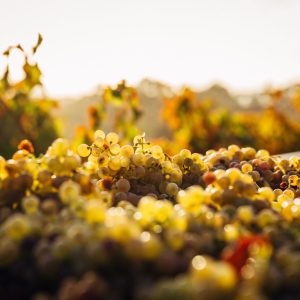
Georgia grows over 500 grape varieties — more indigenous varieties than almost any country on earth. Here are the ones you’re most likely to encounter:
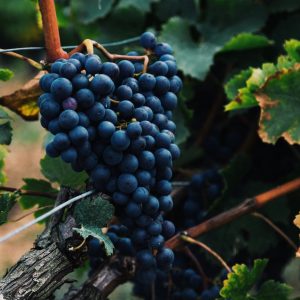
Saperavi is Georgia’s most famous red grape and one of the few dark-fleshed varieties in the world, meaning it produces deeply colored, tannic, age-worthy red wines. Grown mainly in Kakheti, Saperavi is the grape behind Georgia’s most celebrated reds.
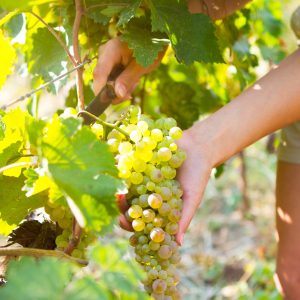
Rkatsiteli is the most widely planted white grape in Georgia, producing crisp, aromatic wines with good acidity. In Kakheti it is often made in the traditional amber style using skin contact.
Mtsvane is a delicate, floral white grape often blended with Rkatsiteli but increasingly bottled on its own. It produces some of Georgia’s most elegant whites.
Kindzmarauli is a semi-sweet red wine made from Saperavi grapes grown in the Kindzmarauli micro-zone of Kakheti. If you find conventional dry reds too heavy, this is a wonderful introduction to Georgian wine.
Aleksandrouli and Mujuretuli are rare red grapes grown only in the high-altitude Racha-Lechkhumi region, used to produce the prized semi-sweet Khvanchkara wine.
Ojaleshi is a rare red grape from Samegrelo, producing light, aromatic wines with a slightly sweet finish — very hard to find outside Georgia.

What is Orange Wine? Georgia Invented It
If you’ve heard of “orange wine” lately, you have Georgia to thank. Long before it became trendy in wine bars from London to New York, Georgians were making it for 8,000 years.
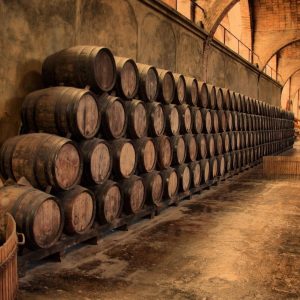
Orange wine (also called amber wine in Georgia) is white wine made with extended skin contact — the grape skins remain in the juice during fermentation, just as they do in red wine production. This gives the wine its distinctive amber or orange color, as well as added tannins, texture, and complex nutty, dried fruit flavors.
In Georgia, this is simply the traditional way of making wine: white grapes are crushed and fermented together with their skins, seeds, and stems inside a Qvevri buried in the ground. The result is unlike any conventional white wine — richer, more textured, and infinitely more interesting.
If you visit Georgia and try only one wine, make it a traditional amber Rkatsiteli from Kakheti. It will change the way you think about white wine forever.
How to Do a Wine Tour in Kakheti
Kakheti is just 1.5 hours from Tbilisi by car and is the ideal destination for a wine day trip or overnight stay. The region’s main towns are Telavi and Sighnaghi, both excellent bases for exploring.
A typical Kakheti wine tour includes:
- Visiting a large estate winery such as Khareba (whose wine cellar is tunneled 7.7km into the Caucasus Mountains) or Tsinandali (a 19th-century estate with a historic English garden)
- Stopping at a small family winery to see traditional Qvevri winemaking up close
- Exploring the hilltop town of Sighnaghi, known as Georgia’s “City of Love,” with its panoramic views over the Alazani Valley
- Tasting local food alongside the wine — churchkhela (walnut-filled grape candy), cheese, and fresh bread
The best time for a wine tour is September to October, when the harvest festival Rtveli is taking place, and the vineyards are at their most beautiful.
Rtveli – Georgia’s Harvest Festival
When discussing Georgian wines, it is essential to mention Rtveli, the traditional grape harvest festival held each autumn. Rtveli takes place in late September or mid-October depending on the region, when families and friends gather in the vineyards to pick grapes together.
After the harvest, everyone gathers at a Supra — a traditional Georgian festive table overflowing with food and wine. Guests are welcome to join the picking, tread grapes, and celebrate alongside local families. It is one of the most authentic cultural experiences Georgia offers, and one that most tourists never know to look for.
Wineries to Visit in Georgia
Khareba Winery (Kvareli, Kakheti) — Georgia’s most dramatic winery, with 7.7km of wine tunnels carved into the Caucasus Mountains. Offers tours, tastings, and a restaurant.
Tsinandali Estate (Tsinandali, Kakheti) — A historic 19th-century estate once belonging to poet Alexander Chavchavadze, with a stunning English garden, wine museum, and tastings.
Château Mukhrani (Kartli) — A beautifully restored royal estate near Mtskheta producing European-style wines alongside traditional Georgian varieties. A must-visit on the way from Tbilisi.
Pheasant’s Tears (Sighnaghi, Kakheti) — One of Georgia’s most celebrated natural wine producers, beloved by wine lovers worldwide. Small, artisanal, and rooted in tradition.
Alaverdi Monastery Winery (Kakheti) — A working monastery that has been making wine since the 11th century, still using traditional Qvevri buried beneath the monastery floor.
Ulevari Valley Winery – A small family winery located near Tbilisi, in the village of Martkopi, Georgia. It produces natural wines using traditional Georgian grape varieties like Saperavi and Rkatsiteli. The winery welcomes visitors for tastings and tours, showcasing authentic Georgian winemaking traditions.
Beyond wine production, Ulevari Valley also offers a warm, personal visitor experience with vineyard and cellar tours, as well as tastings that include traditional Georgian wine and chacha (Georgian grappa). The winery is rooted in family tradition and even sits in an area with historical significance dating back to the Battle of Martkopi.
Plan Your Georgian Wine Experience
There is no better way to understand Georgian wine than to taste it where it was born — in a cellar carved into a mountainside, or at a family table in Kakheti as the sun sets over the vineyards.
Ready to taste Georgian wine in person? Browse our wine tours in Kakheti and across Georgia — we’ll take care of everything from transport to tastings.

Comment (0)